|
Home
|
| A history of the Green Bay
Route's cabooses up through the takeover of the Wisconsin Central by the
Canadian National in 2001.
|
This information was made possible through the research of John Campbell, Bob Welke, Bob Wandel and others.
IndexEarly RosterWooden Cupola Cabooses (1920s - 1937) Rebuilding With Bay Windows (1930s) Transfer Caboose Rebuilding (1960s) Modern Caboose Fleet (1960s - 1993) Post-GBW Caboose Roster (1993+) Preserved GBW Cabooses Consolidated Caboose Roster (1920s - 1993) |
|||||||||||||||||||||||||||||||||||||||||||||||||||||||||||||||||||||||||||||||||||||||||||||||||||||||||||||||||||||||||||||||||||||||||||||||||||||||||||||||||||||||||||||||||||||||||||||||||||||||||||||||||||||||||||||||||||||||||||||||||||||||||||||||||||||||||||||||||||||||||||||||||||||||||||||||||||||||||||||||
Early RosterIn the early part of the twentieth century the Green Bay Route rostered a collection of wooden cupola cabooses from unknown sources. There were up to 15 cabooses at one time on the predecessor Green Bay Winona & St. Paul roster; after the Green Bay & Western was formed from the bankrupt GBW&StP the total fluctuated between 9 and 12 in the first decades of the twentieth century. Official Railway Equipment Register and Wisconsin Railroad Commission data indicates that all cabooses were assigned to Green Bay & Western; the subsidiary lines Ahnapee & Western, Iola & Northern and Kewaunee, Green Bay & Western were listed in the documents but had no cabooses. Cabooses GB&W 061 and 062 may have been former KGB&W cabooses acquired in the 1897 merger of the two lines.
Of interest are cabooses #60 and #244 listed as "Caboose, Box." Other railroads had listings for "Caboose (Box Car)" in ORERs so this was likely a similar listing. These may have been a former freight cars converted into cabooses and used for transfer runs. The 200- series freight cars on the GB&W were flat cars, odd numbers only, and thus unlikely to be the source of the #244 caboose; these two mysterious cars may have been pre-GB&W freight cars. |
|||||||||||||||||||||||||||||||||||||||||||||||||||||||||||||||||||||||||||||||||||||||||||||||||||||||||||||||||||||||||||||||||||||||||||||||||||||||||||||||||||||||||||||||||||||||||||||||||||||||||||||||||||||||||||||||||||||||||||||||||||||||||||||||||||||||||||||||||||||||||||||||||||||||||||||||||||||||||||||||
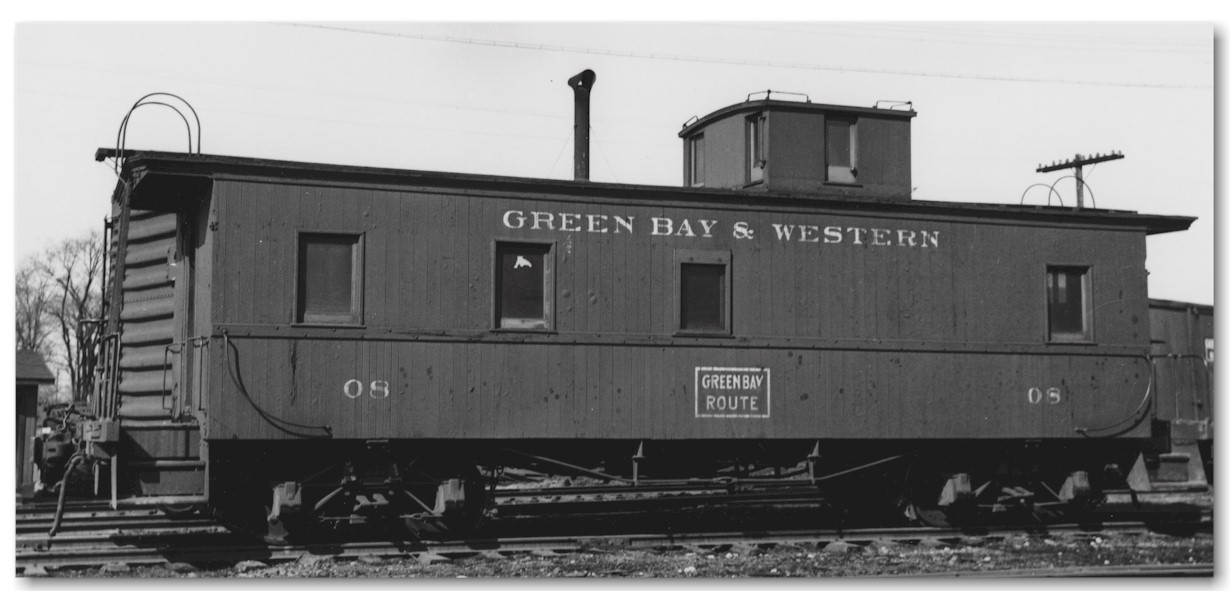
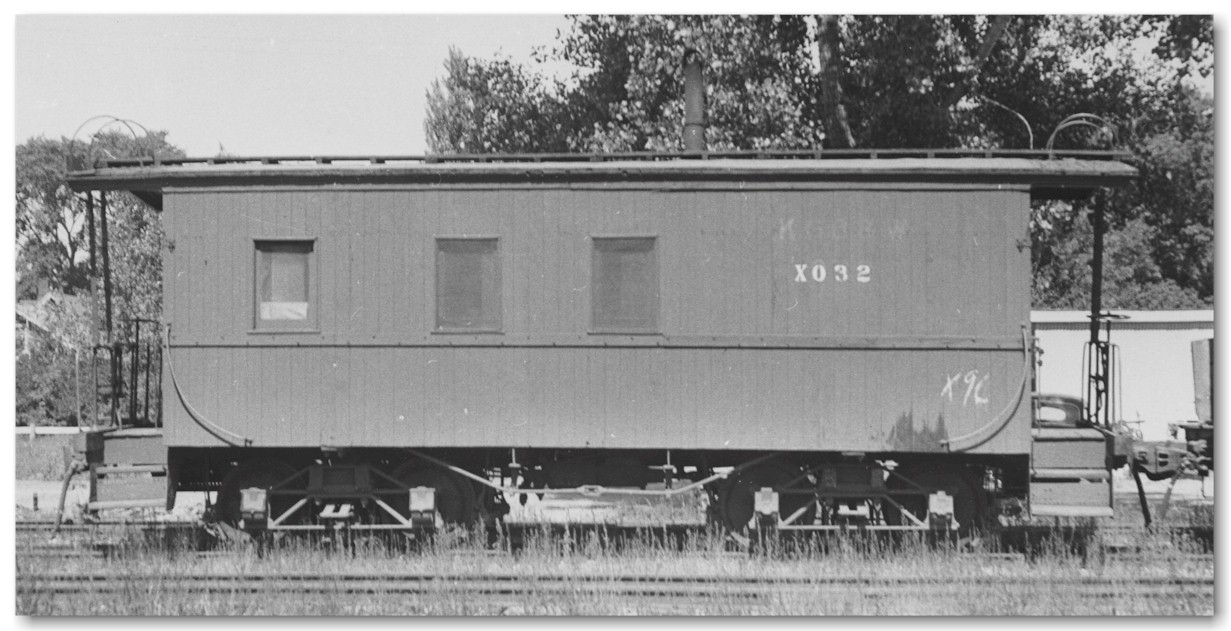
Wooden Cupola Cabooses (1920s - 1937)Many of the cabooses were replaced numerically in the 1920's with second-hand wooden cupola cabooses, which were soon after rebuilt with steel underframes. There were a total of sixteen cabooses, eleven assigned to the GB&W, one to the A&W, and four to the KGB&W.
Cabooses #60 and #244 (Caboose, Box) were gone from the roster by this time. The cabooses were red with the road name in railroad roman lettering centered on the car side above the windows and the road number centered on the car side below the windows. Later, a simplified scheme with the reporting marks and number in gothic lettering centered between the roof edge and strap just below the cupola. |
Wood Cupola Cabooses: | ||||||||||||||||||||||||||||||||||||||||||||||||||||||||||||||||||||||||||||||||||||||||||||||||||||||||||||||||||||||||||||||||||||||||||||||||||||||||||||||||||||||||||||||||||||||||||||||||||||||||||||||||||||||||||||||||||||||||||||||||||||||||||||||||||||||||||||||||||||||||||||||||||||||||||||||||||||||||||||||
Rebuilding With Bay Windows (1930s)Most of the wooden cupola cabooses were rebuilt in 1937-1943 by removing the cupola and adding metal bay windows. The fleet was renumbered to the 600- series at this time. Three 60' passenger coaches (#86, #107 and #109) were converted to combination caboose-coach cars with the addition of a bay window on one end of the car. They were used on mixed freight trains until the end of passenger service in 1949.
Rebuilt cabooses were painted red with gray window sashes. The handrails were painted yellow beginning in the late 1940s. Most had a standard GREEN BAY ROUTE herald below the bay window; the added bay window was offset from center and "GB&W" and the car number was in white gothic lettering on the long half of the car side. GBW #604, #606, #010, #012 became transfer cabooses and did not have bay windows. GBW #603 became a supplemental business car to the primary business car #600 ROAMER; both were painted dark green with gold lettering and no GREEN BAY ROUTE herald to indicate the company purpose for those cars. It was usually assigned to Whitehall Division Superintendent Van Dreese at Wisconsin Rapids. Gold "GB&W" was applied to the short side and "603" was applied near the end of the long side of the car. Later #603 was repainted with a warmer green color and "GBW" with "603" beneath it was centered on the lower half of the long side between the bay and car body window. Sill no GREEN BAY ROUTE, but with yellow grab irons. Caboose #620 kept the standard paint scheme after the 1947.06.01 sale to A&W, but with the GREEN BAY ROUTE herald and reporting marks painted over. In 1954 the caboose received a new paint scheme with AHNAPEE & WESTERN RAILWAY art deco font; on one side the lettering above it read "ROUTE YOUR FREIGHT" like the A&W diesels, but the other side read "SHIP VIA" like the A&W steam locomotive tenders. In 1963.07 it was repainted with a large A&W RAIL-TRUCK ROUTE herald opposite the bay window; silver end platforms, ladders, grab irons, lamp brackets, and smokestack; and the red window sashes matched the rest of the car body. The caboose was probably renumbered to #33 at that time. The car was sold in 1972.12 to Dee Erickson of Casco, and the car was moved from Algoma to Casco by Jim Rabas (local tow truck/mover) on a trailer, sans trucks. The caboose was welded to a short piece of track in front of the 'Erickson Apl Hus' in Casco on state highway 54 through most of the 1970s before being transferred to the National Railroad Museum in Green Bay. |
Wood Bay Window Cabooses: | ||||||||||||||||||||||||||||||||||||||||||||||||||||||||||||||||||||||||||||||||||||||||||||||||||||||||||||||||||||||||||||||||||||||||||||||||||||||||||||||||||||||||||||||||||||||||||||||||||||||||||||||||||||||||||||||||||||||||||||||||||||||||||||||||||||||||||||||||||||||||||||||||||||||||||||||||||||||||||||||
Transfer Caboose Rebuilding
Some of the wood cabooses were rebuilt into transfer units beginning in
the 1960s using the existing caboose frames and with a short center
steel cab, retaining the 600- number series previously used. Two
cabooses escaped the conversion, AHW #33 and GBW #605. By July 1966 #605
was sold to the Copper Range Railroad of Houghton, Michigan as CRRR
#605.
|
|||||||||||||||||||||||||||||||||||||||||||||||||||||||||||||||||||||||||||||||||||||||||||||||||||||||||||||||||||||||||||||||||||||||||||||||||||||||||||||||||||||||||||||||||||||||||||||||||||||||||||||||||||||||||||||||||||||||||||||||||||||||||||||||||||||||||||||||||||||||||||||||||||||||||||||||||||||||||||||||
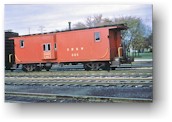
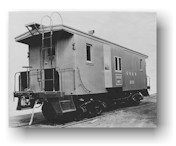
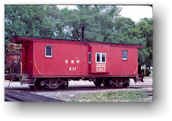
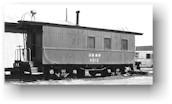
| 1960's Transfer Cabooses | |
| GBW 601 transfer caboose |
Rebuilt from an unknown car as a transfer caboose with a short center cab. Renumbered #101 in 1980. |
| GBW 602 transfer caboose |
Rebuilt as transfer caboose with a short center cab. Photos tend to indicate that wood caboose #602 wasn't the donor for the frame of transfer caboose #602. Renumbered #102 in 1980. |
| GBW 604 transfer caboose |
Caboose X604 was rebuilt as a transfer caboose with short center cab and renumbered 604. Last known photo was dated 1985. |
| GBW 605 (2nd) transfer caboose |
Rebuilt transfer caboose with short center cab after the sale of first #605. Last known photo was dated September 1980. |
Modern Caboose Fleet
(1960s - 1993)
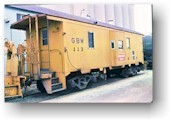
Two steel bay window cabooses built by Thrall Car Manufacturing Company
were added to the roster in 1961. GBW #613 and #614 were similar in
construction to the design used for about 150 Chicago & North
Western RR cabooses built at the same time. Caboose #614 had large
"The Colonel Caboose" lettering on the sides early in its
career.
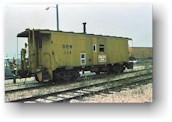
Three additional bay window cabooses were built by International Car Company in 1965-66. They are #615, #616, and #617. They were purchased as shells from International Car Company and the GBW completed the interiors with the 615-616 going into service in 1966 and the 617 in 1967.
The last of the original 600- series cabooses to be rebuilt were #608 and #618 in 1969 for way freight service. They were fabricated by Kraft Steel Fabricators in Green Bay, and had small fiberglass bay windows. GBW #608 was typically assigned to trains No. 5 and 6 (Green Bay to Amherst Junction) and #618 for trains No. 7 and 8 (Wisconsin Rapids to Plover/Manawa).
After Itel Corporation purchased the GB&W the caboose fleet was renumbered from the 600- series to the 100- series in the winter of 1978-79. This was done because of the recent purchase of a fleet of 600- series boxcars and the inability of the computer system in place at the time to handle two different sets of cars with the same numbers. The cabooses retained their last two digits.
In the early 1980s the Federal Railroad Administration required caboose windows to be equipped with shatterproof glass. By 1982 the GB&W eliminated many of the road caboose windows by replacing them with steel plates, with only the bay windows and small windows on the end doors left remaining.
| Modern Caboose Roster | |
| GBW 601 / 101 transfer caboose |
Transfer caboose with short center cab. |
| GBW
602 / 102 transfer caboose |
Transfer caboose with short center cab. Destroyed by fire on 1991.01.25 in Norwood Yard from a leaking fuel oil line. |
| GBW 604 / 104 transfer caboose |
Last known photo was dated 1985 |
| GBW 605 / 105 transfer caboose |
Transfer caboose with short center cab. Last known photo was dated September 1980. |
| GBW 608 / 108 road caboose |
Road caboose with small fiberglass bay window built in 1969. The car length and position of the axle generator and underbody brake gear implies that wood caboose #608 was the source of the frame. |
| GBW 112 road caboose |
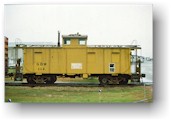
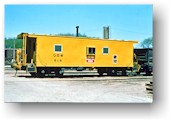
Cupola caboose, ex-Missouri Pacific #11241, acquired June 1980. Put in service May 1981 and was typically assigned to the 'Plover local' which served the paper mills in Central Wisconsin; it replaced #116 on 'Boat Trains' No. 1 & 2 beginning around January 1990. |
| GBW
613 / 113 GBW 614 / 114 road caboose |
Steel bay window cabooses built by Thrall Car Manufacturing Company in 1961. |
| GBW 615 / 115 GBW 616 / 116 road caboose |
Steel bay window cabooses built by International Car Company 1965.06. #616 was usually assigned to Trains No. 1 & 4 from the 1960s through 1990, after which it was reassigned to the west side of Green Bay ''Park Job'' which usually went on call at 6:30 A.M. |
| GBW 617 / 117 road caboose |
Steel bay window cabooses built by International Car Company in 1967. |
| GBW 618 / 118 road caboose |
Road caboose with small fiberglass bay window built in 1969. Perhaps an old caboose was the source of the frame. Scrapped at Norwood Yard on 1990.01.11 & 12. |
The final caboose added to the GB&W roster was a second hand riveted steel cupola caboose purchased 1980 when an increase in traffic often required a second Green Bay - Winona train. GB&W#112 was built by International Railway Car (International Car Co.) in 1956 for the Kansas Oklahoma & Gulf as #1549, renumbered to Missouri Pacific #13241 [by 1969] as the KO&G was merged into the MP system and eventually renumbered MP #12241, then #11241 by the time it was retired from the MP in 1978 (the change in the first two digits indicated assignemnt in road, local and transfer service, respectively). The 112 made it's "trial" Green Bay to Winona run on May 10, 1980 (with the 115 as the "working" caboose). The car was later often used on the Plover way freight.
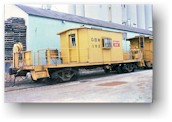
Road Cabooses
Post-GBW Caboose Roster
(1993+)
The Wisconsin Central RR purchased the Green Bay & Western in August 1993. At that time the following cabooses went in service on the Wisconsin Central.
| Wisconsin Central / Canadian National's ex-GB&W Caboose Roster | |
| GBW 101 transfer caboose |
Became WC #101 transfer caboose; involved in a collision on July 26, 1993. Scrapped the summer of 2001. |
| GBW 112 road caboose |
Became WC #112; acquired from CN/WC by the Colfax, Wis. Railroad Museum. Last reported at the Colfax museum in February 2003. |
| GBW 113 road caboose |
Steel bay window cabooses built by Thrall Car Manufacturing Company in 1961. |
| GBW 114 road caboose |
Became WC #114 and repainted yellow with a WC shield; later restencilled GBW 114. Usually stored in Manitowoc, Wis. and used about three times a week for the backup move to Rockwood. As of April 2010 it was listed for sale on Craigslist. |
| GBW 115 road caboose |
Became WC #115; by 1996 it was at Thomaston, Mich.; later to Neenah and generally used for a backup move from the US Paper Converting plant, currently used for trackwork and other MOW projects in Appleton, Wis. Last reported February 2015. |
| GBW 116 road caboose |
Spent some time in transfer service around Sault Ste. Marie, Michigan, with a WC herald where the GBW herald was. Last reported fully plated over in WC solid maroon paint and renumbered #19 with the new Wisconsin Central System herald stenciled on. As of 2004 it was used primarily on CN train YGY758 which runs on the old C&NW line from Green Bay towards towards Manitowoc. Last reported in use at Green Bay in December 2009. |
| GBW 117 road caboose |
Donated to the Portage County Historical Society in 2002. |
The disposition of cabooses #108 and 118 are unknown. The last known photo of #108 was taken on July 18, 1992.
In October 2001 the Canadian National Railway merged the Wisconsin Central. As of that time, the remaining GB&W cabooses on the WC were #112, #114, #115, #116 (renumbered WC #19) and #117.
Preserved GBW Cabooses
| Preserved GB&W Cabooses | |
| GBW 605 | On display near Big Bay, Mich. |
| GBW 113 | On display at the Rock K Ranch, 2372 Day Street (state highway 96), Greenleaf Wis. |
| GBW 116 | Owned by Dufeck Wood Products Manufacturing. It sits on the Dufek spur on the Canadian National tracks in Denmark, Wisconsin and has been restored in GBW paint, including unplating the windows. |
| GBW 117 | Acquired by the Portage County Historical Society in 2002 and on display at Heritage Park, Plover, Wis. |
| AW 33 | Ahnapee & Western's sole caboose is housed indoors at the National Railroad Museum in Green Bay. |
Consolidated Caboose Roster (1920s - 1993)
| Marks | Road Number | type | material | acquired | rebuilt | retired | ||
| 1920s-1930s | 1940s-1980 | 1980-1993 | ||||||
| GB&W | 01 | 601 (1st) | road | wood | ? | ? | 1949 | |
| GBW | 601 (2nd) | 101 | transfer | steel | ca. 1960s | to WC in 1993 | ||
| GB&W | 02 | 601 (1st) | road | wood | 1921 | 1937 | 1965? | |
| GBW | 602 (2nd) | 102 | transfer | steel | ca. 1960s | 1990.01.25 | ||
| GB&W | 03 | 603 | road | wood | 1921 | 1937 | 1972 | |
| GB&W | 04 | 604 (1st) | road | wood | 1921 | 1937 | 1967 | |
| GBW | 604 (2nd) | 104 | transfer | steel | ca. 1960s | 1985 | ||
| GB&W | 05 | 605 (1st) | road | wood | 1921 | 1937 | 1966 | |
| GBW | 605 (2nd) | 105 | transfer | steel | ca. 1960s | 1980 | ||
| GB&W | 06 (1st) | road | wood | 1921 | 1929 | |||
| GB&W | 06 (2nd) | 606 | road | wood | 1929 | 1937 | Late 1950s | |
| GB&W | 07 | 607 (1st) | road | wood | 1921 | 1937 | 1954 | |
| GB&W | 607 (2nd) | road | wood | 1954 | 1967 | |||
| GB&W | 08 | 608 (1st) | road | wood | 1925 | 1939 | 1969 | |
| GBW | 608 (2nd) | 108 | road | steel | 1969 | unknown | ||
| GB&W | 09 | 609 | road | wood | 1921 | 1940 | 1967 | |
| GB&W | 010 | road | wood | 1925 | ||||
| GB&W | 011 | 611 | road | wood | 1925 | 1937 | 1967 | |
| GB&W | 012 | road | wood | ? | 1960s | |||
| GBW | 112 | road | steel | 1980.08 | to WC in 1993 | |||
| GBW | 613 | 113 | road | steel | 1961 | to WC in 1993 | ||
| GBW | 614 | 114 | road | steel | 1961 | to WC in 1993 | ||
| GBW | 615 | 115 | road | steel | 1966 | to WC in 1993 | ||
| GBW | 616 | 116 | road | steel | 1966 | to WC in 1993 | ||
| GBW | 617 | 117 | road | steel | 1967 | to WC in 1993 | ||
| GBW | 618 | 118 | road | steel | 1969 | 1990.01.11 | ||
| A&W | 020 | 620, 33 | road | wood | 1924 | 1943 | 1972 | |
| KGB&W | 030 | road | wood | 1922 | ? | 1967 | ||
| KGB&W | 031 | road | wood | 1924 | ? | 1967 | ||
| KGB&W | 032 | road | wood | 1928 | ? | |||
| KGB&W | 033 | road | wood | ? | 1936 | |||
| KGB&W | 061 | road | wood | ? | ? | |||
| KGB&W | 062 | road | wood | ? | ? | |||
| GB&W | 244 | box | wood? | ? | ? | |||